The ongoing conflicts whether in the Middle East involving Iran, Israel, and the U.S., or the prolonged war between Russia and Ukraine remind us of one harsh reality: these wars are often unnecessary, yet the biggest impact is borne by innocent people.
Thousands of civilians have been affected, with homes, hospitals, and basic infrastructure severely damaged. Beyond the headlines, the real loss is not just economic it is human.
What Happens After Conflict
While human loss is deeply tragic, wars also lead to large-scale destruction of:
Infrastructure., Energy systems and Cities and industries
Rebuilding these economies takes years of capital, manpower, and global effort.
As seen in past global conflicts, markets may react negatively in the short term, but they also begin to anticipate the next phase recovery and rebuilding.
The Shift from Destruction to Demand
Once stability begins to return, the focus naturally shifts toward:
- Rebuilding physical infrastructure
- Restoring energy and industrial capacity
- Reviving trade routes and logistics
- Reconstructing cities and public systems
This phase requires massive capital, manpower, engineering expertise, and global participation.
Why This Matters for India
India stands in a unique position in this cycle.
With strong capabilities in:
- Infrastructure development
- Engineering and construction services
- Skilled manpower and project execution
Indian companies are well placed to participate in global reconstruction efforts.
The Bigger Picture
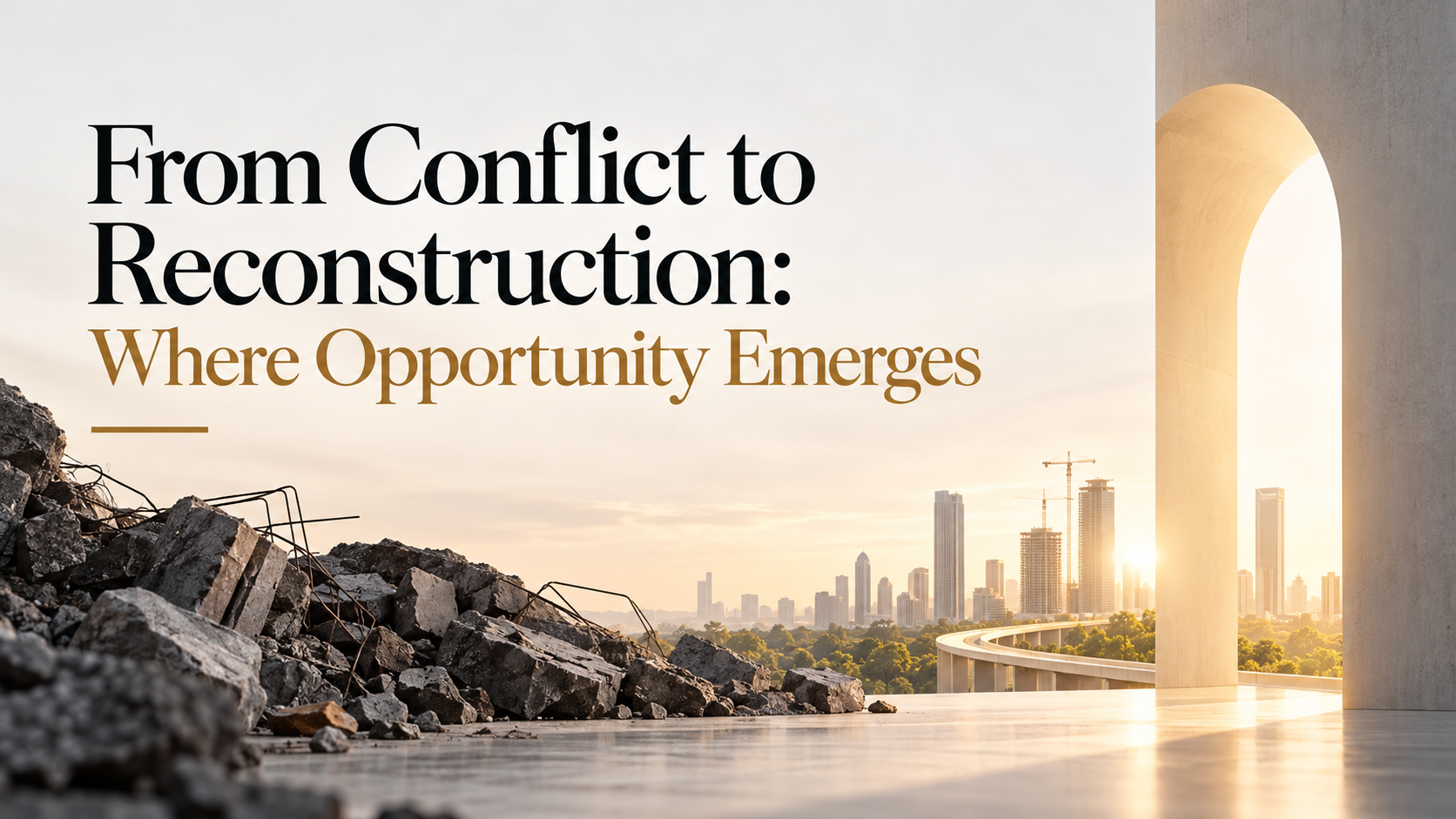
While conflicts create short-term fear, they also set the stage for long-term rebuilding and economic activity.As highlighted in historical data, markets tend to move ahead of events. Even during conflicts, they begin pricing in: Stabilization, Recovery and Future growth
The transition from destruction to reconstruction is where new opportunities emerge for economies, businesses, and investors.This is why markets often bottom out before the actual situation improves and start rising while uncertainty still exists.
Final Thought
While conflicts create uncertainty, history shows that rebuilding always follows destruction, and markets begin to reflect that recovery early.
But beyond markets and economics, the real hope lies in something far more important that sanity prevails.
A return to stability, cooperation, and peace is what truly enables sustainable growth for economies and societies alike.
Staying disciplined in investing is important but hoping for a more stable world is equally essential.